GDPR Data Processing Agreements (DPA) Explained for Marketers
What a Data Processing Agreement actually covers, when your marketing team needs one, and what to check before signing a vendor’s standard DPA.
Team AdverizeoUpdated 4 min read
On this page
- 1. Controller vs. processor: why this matters
- 2. What Article 28 requires a DPA to actually contain
- 3. Check the sub-processor list, not just the headline vendor
- 4. Cross-border transfer terms belong in or alongside the DPA
- 5. Standard vendor DPAs vs. negotiated terms
- 6. Building an internal DPA inventory
- Checklist before adding a new marketing tool
Every marketing tool that processes personal data on your behalf (your email platform, your CRM, your ad platforms, your analytics tools) needs a Data Processing Agreement in place. Most vendors already have one ready to go, but "a DPA exists" and "the DPA actually covers what you need" are different things. This guide is about the second part.
1. Controller vs. processor: why this matters
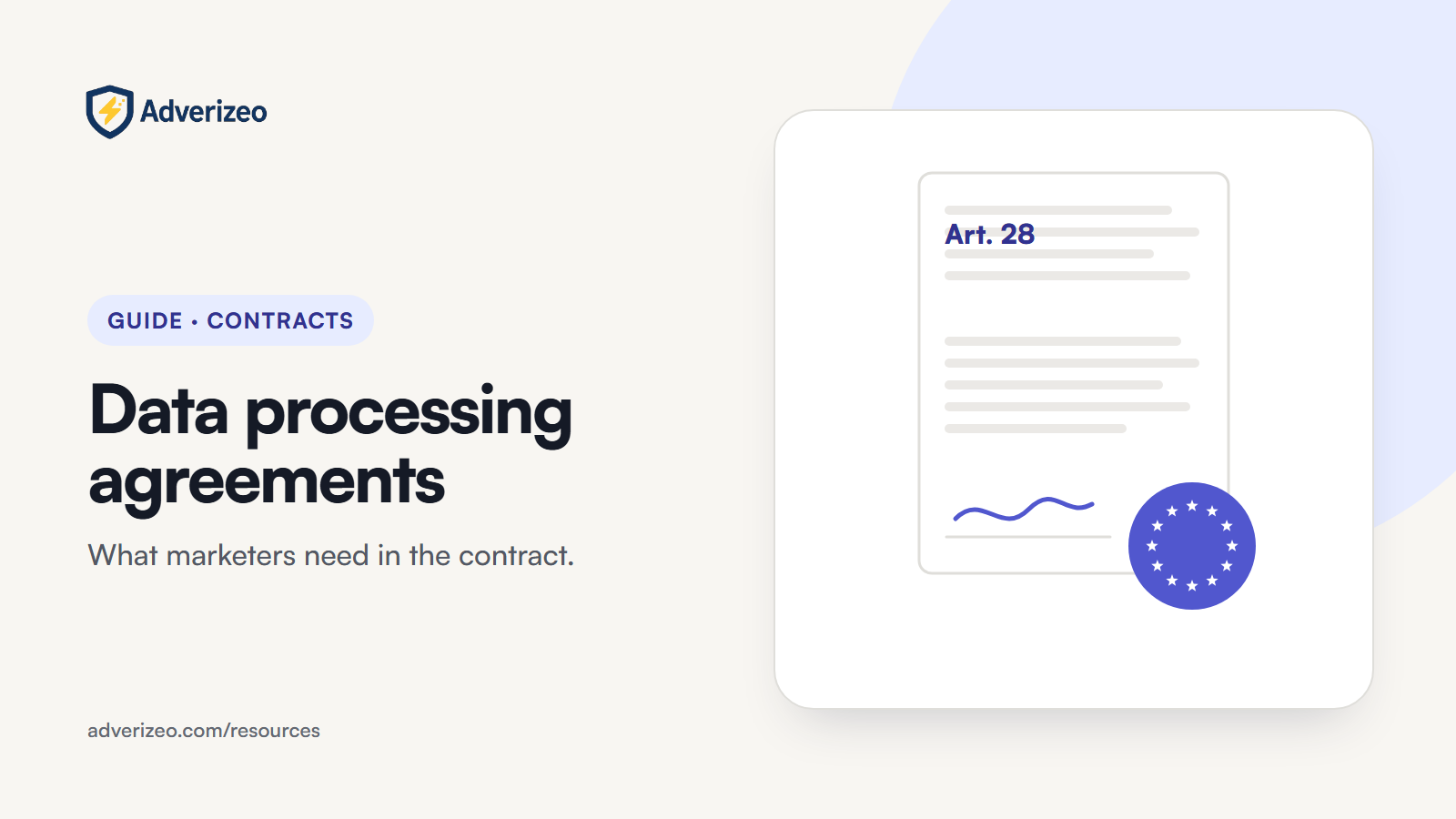
Under GDPR, the controller decides why and how personal data is processed; for most marketing activities, that's your business. A processor processes data on the controller's behalf and instructions: your email service provider, ad platform or analytics tool, in most configurations. Article 28 requires a written contract (the DPA) whenever a controller uses a processor, setting out exactly what the processor can and can't do with the data.
Some vendors act as controllers for parts of their own service (for example, an ad platform using your data for its own product improvement). In that case a DPA alone isn't the right document. Check whether the vendor's terms describe a joint-controller or independent-controller relationship for that specific use, which carries different obligations than a straightforward processor relationship.
2. What Article 28 requires a DPA to actually contain
A compliant DPA needs to specify, at minimum:
- The subject matter, duration, nature and purpose of the processing, and the categories of data and data subjects involved.
- That the processor only processes data on documented instructions from the controller.
- Confidentiality commitments for anyone with access to the data.
- Security measures appropriate to the risk (referencing Article 32).
- Terms for engaging sub-processors, including a requirement to flow down the same obligations.
- Assistance obligations: helping the controller respond to data subject rights requests and data breaches.
- Deletion or return of data at the end of the engagement.
- The processor's cooperation with audits and provision of information demonstrating compliance.
A one-paragraph "we comply with GDPR" clause buried in a vendor's general terms of service is not a DPA, even if the vendor calls it one.
3. Check the sub-processor list, not just the headline vendor
Most marketing tools rely on their own sub-processors: cloud hosting, customer support tooling, analytics-on-analytics. A proper DPA discloses these (often via a linked, maintained sub-processor list) and requires the vendor to notify you of changes, ideally with a chance to object. If a vendor's DPA doesn't mention sub-processors at all, that's a gap worth asking about directly. For an example of what a public list looks like, see Adverizeo's own subprocessor list.
4. Cross-border transfer terms belong in or alongside the DPA
If the vendor processes data outside the EEA (most US-headquartered marketing tools do), the DPA or an attached transfer addendum needs to specify the transfer mechanism: Standard Contractual Clauses, an adequacy decision, or the EU–US Data Privacy Framework for certified US companies. A vendor certified under the Data Privacy Framework appears on the official list at dataprivacyframework.gov, so you can check rather than take the vendor's word for it.
5. Standard vendor DPAs vs. negotiated terms
For most SaaS marketing tools at typical SME scale, the vendor's standard DPA (often accepted alongside the terms of service, or available as a self-serve document in account settings) is the realistic path. Large platforms like Google, Meta and major email providers won't individually negotiate terms for a small account. What you can and should do: actually read it, confirm it covers the Article 28 elements above, and keep a record of which version you agreed to and when.
6. Building an internal DPA inventory
A simple, practical control most marketing teams are missing: a single list of every tool that processes personal data, whether a signed or accepted DPA is on file, the date, and the sub-processor and transfer notes. This becomes the answer to "can you demonstrate your vendor compliance" during an audit, or when a data subject access request touches third-party tools.
Checklist before adding a new marketing tool
- Confirm whether the vendor is a processor, a joint controller or an independent controller for your specific use case.
- Locate and read the actual DPA, not just the marketing page that says "GDPR compliant."
- Confirm it covers every Article 28 element listed above.
- Check the sub-processor list and transfer mechanism for non-EEA processing.
- Log it in your internal DPA inventory with the date accepted.
This guide is general information, not legal advice. For high-risk vendor relationships or non-standard data flows, have a qualified data protection professional review the actual DPA text before signing.
Using Adverizeo with customer data? Our Data Processing Agreement page sets out the terms we work to as your processor.